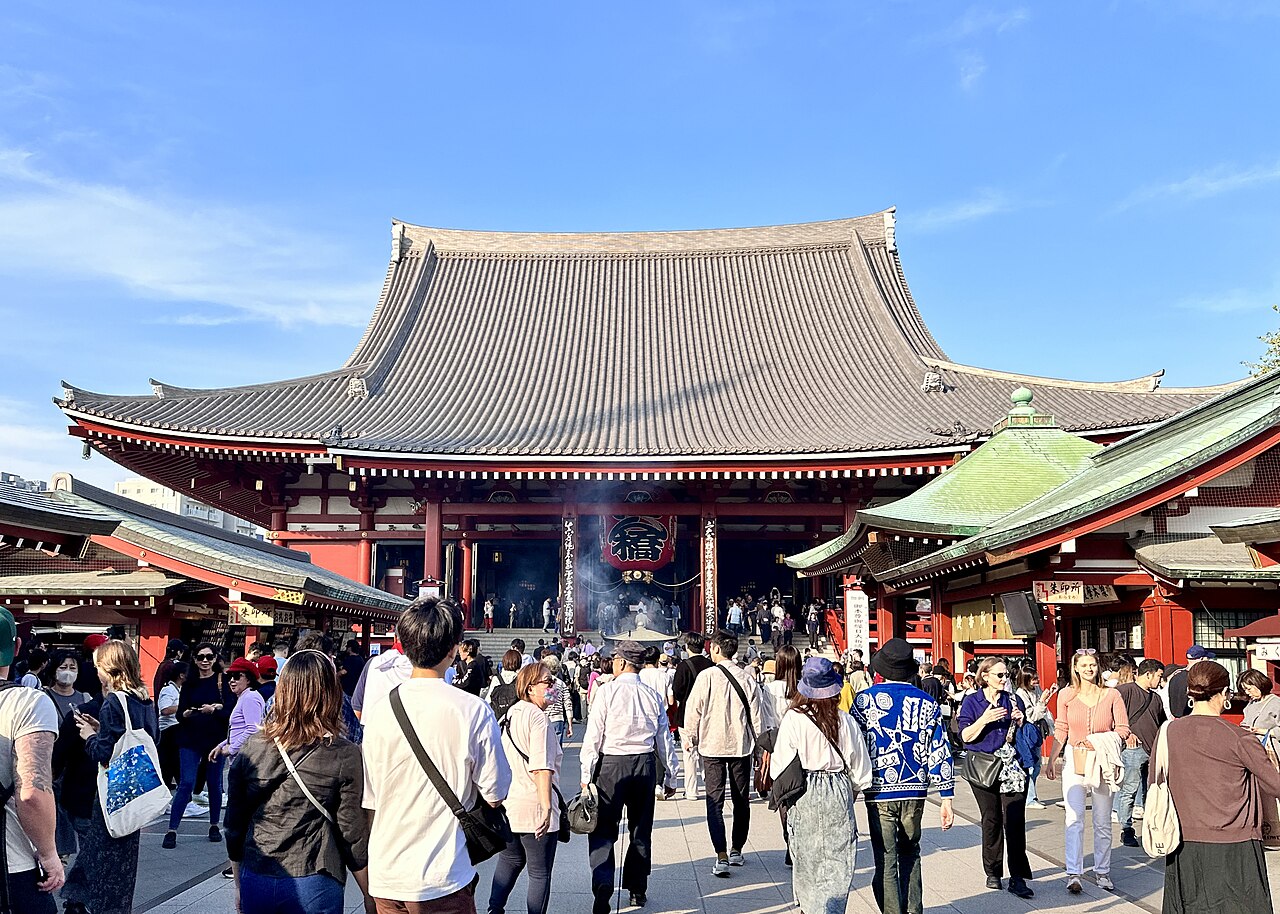
Tokyo's oldest temple: a giant red lantern on the Kaminarimon gate and the Nakamise shopping street full of snacks and sweets.
Price Free
Insider tip Come before 8 am or after dark — the temple is lit up and the crowds are gone. Draw an omikuji fortune for ¥100: if it's a bad one, tie it to the rack by the temple.
Photo: David Kernan, CC BY 4.0
🚦Shibuya Crossing
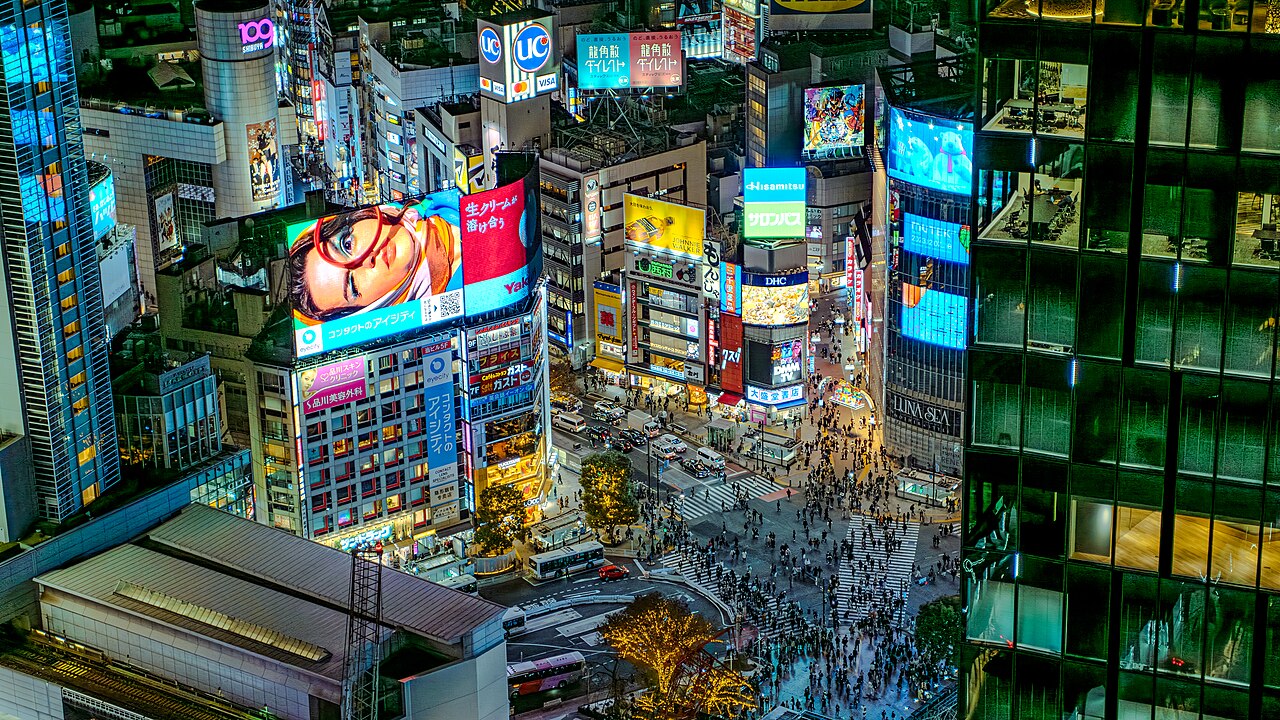
The world's most famous pedestrian crossing: up to three thousand people cross at once when the lights turn green. The statue of the loyal dog Hachiko is right next to it.
Price Free
Insider tip The best view from above is from the windows of the café on the first floor by the station, or from the free rooftop of the Magnet shopping centre. Friday evening is peak show time.
Photo: Akonnchiroll, CC BY-SA 4.0
⛩Meiji Shrine & Harajuku
A Shinto shrine inside a real forest in the middle of the city, and beyond the gates — Harajuku with Takeshita Street, bold street fashion and rainbow sweets.
Price Free
Insider tip On weekend mornings you may see a traditional wedding procession. Then walk down Omotesando, Tokyo's "Champs-Élysées" lined with buildings by famous architects.
Photo: Aimaimyi, CC BY-SA 3.0
🍣Tsukiji Outer Market
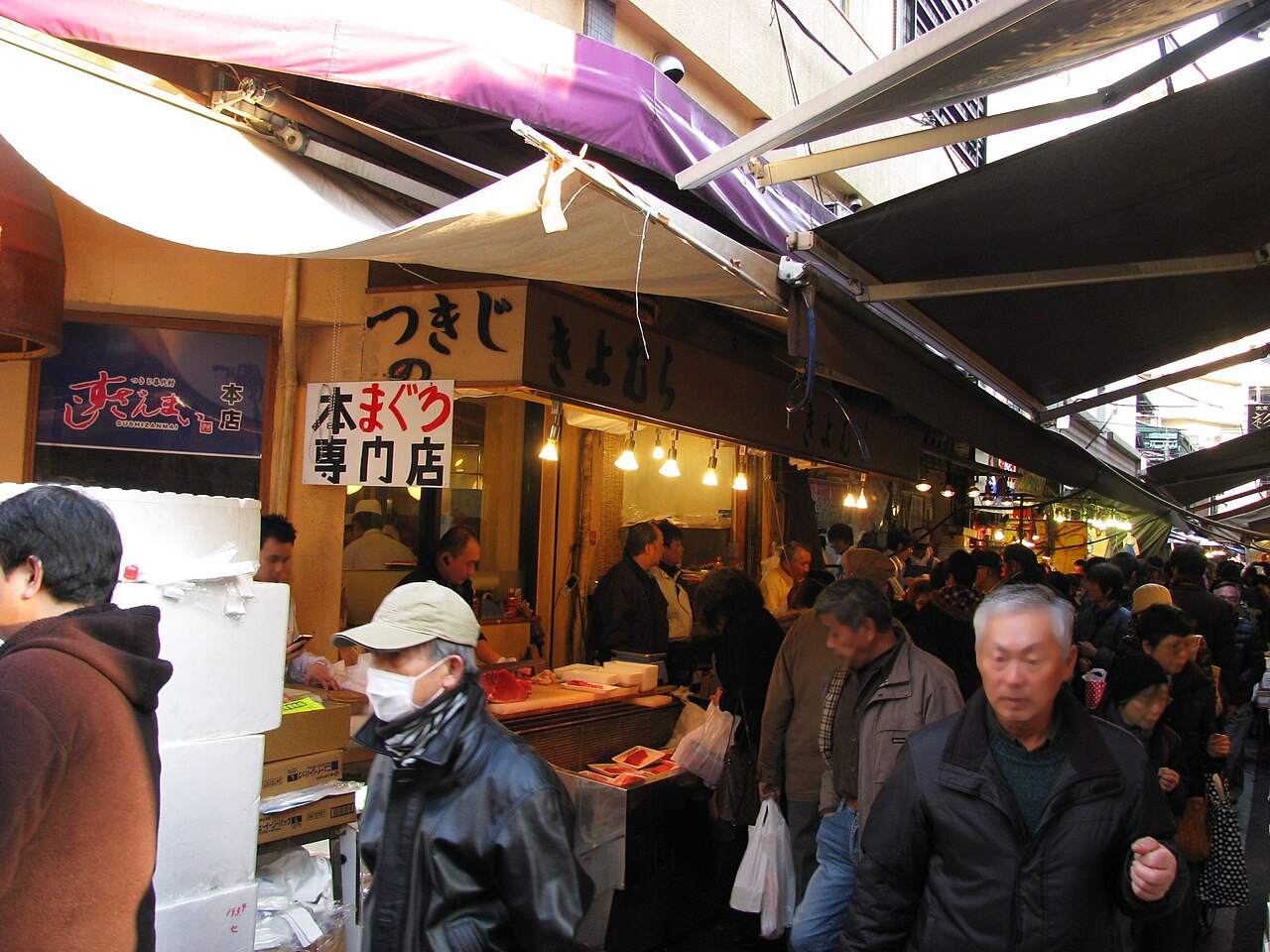
Blocks of stalls where breakfast means the freshest sushi, tamagoyaki on a stick, grilled scallops and strawberries with mochi.
Insider tip Come at 8–9 am: many stalls close by lunchtime. Eat at the stall, not while walking — it's frowned upon here. Some shops close on Wednesdays and Sundays.
Photo: Sasa0403, CC BY-SA 4.0
🌌teamLab Planets
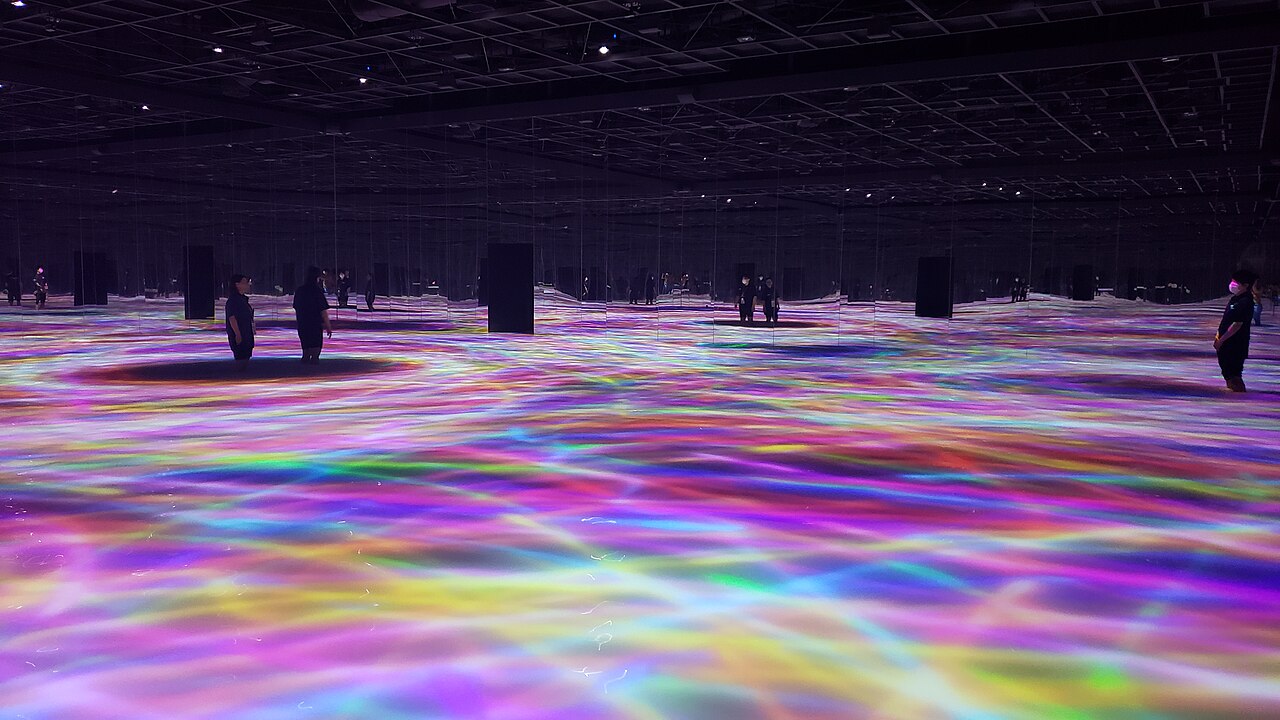
A digital art museum you walk through barefoot: mirrored rooms of flowers, knee-deep water with koi made of light, and a floating garden of orchids.
Price About ¥4,000, depending on the day
Insider tip Tickets are online only and timed — weekends sell out 1–2 weeks ahead. Wear shorts or trousers you can roll up above the knee, and note some floors are mirrored.
Photo: Kakidai, CC BY-SA 3.0
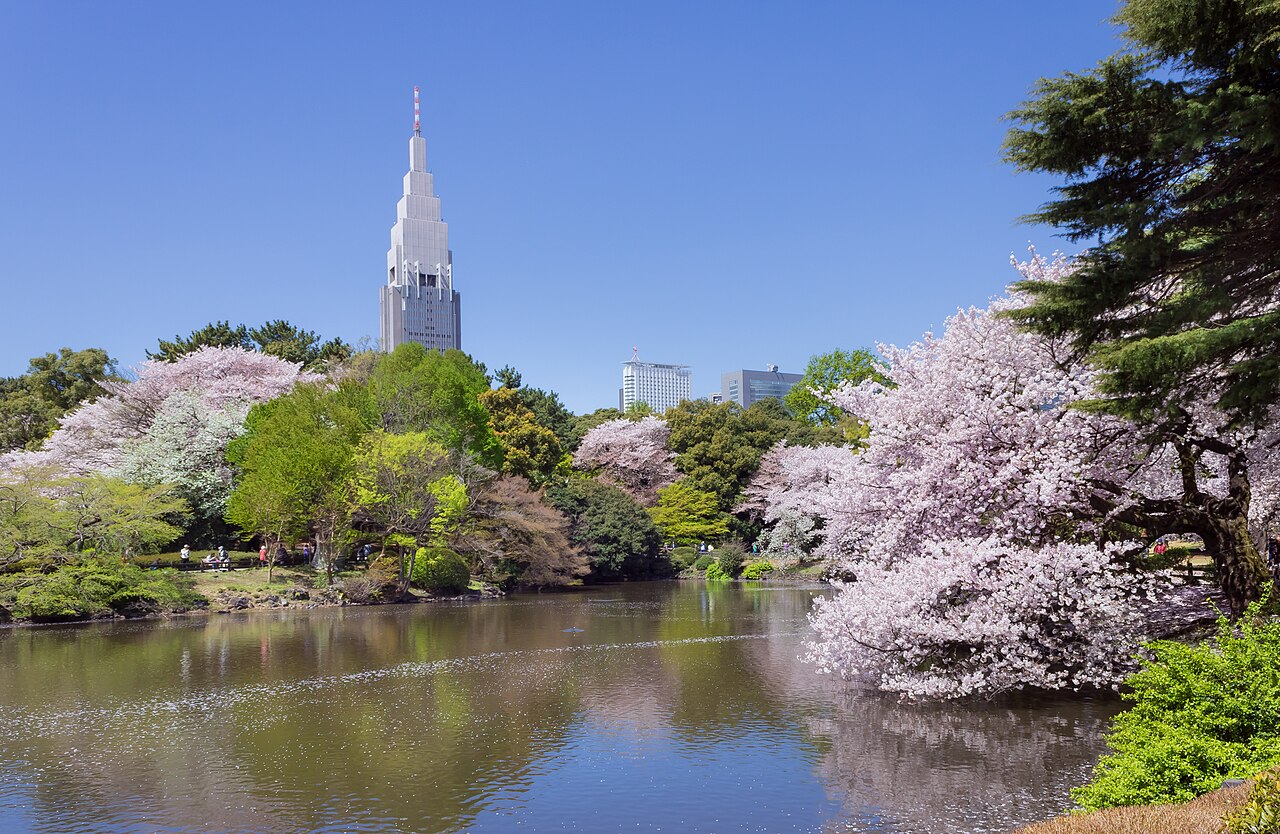
🌸Shinjuku Gyoen National Garden
A huge garden with Japanese, English and French sections: one of the best cherry blossom spots in spring and for maples in autumn.
Price ¥500
Insider tip Alcohol isn't allowed, which makes it the calmest place in central Tokyo for a picnic under the blossoms. Usually closed on Mondays.
Don’t miss
🗻Fuji at dawn
You climb the steps to the red Chureito Pagoda in the morning twilight, and Fuji's perfect cone emerges from the clouds. Winter mornings give you the best odds — worth setting an alarm for 5 am.
⛩A tunnel of a thousand torii
The higher you climb at Fushimi Inari, the quieter it gets: just rustling forest, stone fox guardians and orange gates running up the mountain. At sunset the light falls through them in stripes.
♨️An open-air onsen
A hot spring after a whole day on your feet, steam rising over the water, cool air and silence. Then a yukata, a dinner of ten small dishes and a futon on tatami.
Where to stay
🌃Shinjuku (Tokyo)
First time in Tokyo. The biggest transport hub: trains to Fuji and Hakone, restaurants, bars, the government observatory. Handy for any itinerary.
− The station is a maze, and Kabukicho is noisy at night.
🚦Shibuya (Tokyo)
Youthful buzz. The crossing, Shibuya Sky, cafés and shops, walking distance to Harajuku and Omotesando.
− Expensive hotels, crowds at any hour.
🏮Asakusa & Ueno (Tokyo)
Old Tokyo on a budget. Senso-ji, views of the Skytree, affordable hotels and hostels, a direct train to Narita airport.
− Far from Shibuya and Shinjuku, quiet in the evening.
🗻Kawaguchiko
Fuji from your window. Ryokan and hotels with mountain views right above the lake. One night here gives you a shot at a Fuji sunrise.
− Few cafés in the evening; you need a pre-booked bus.
⛩Gion & Higashiyama (Kyoto)
Kyoto atmosphere. Wooden lanes, geiko and temples within walking distance. In the morning you can stroll empty streets.
− Expensive, and crowded by day.
🚉Kyoto Station area
Easy logistics. Shinkansen, trains to Nara and Fushimi Inari, buses to every part of town. Lots of hotels for every budget.
− Modern and characterless; you need transport to Gion.
🐙Namba (Osaka)
Food and nightlife. Dotonbori, Kuromon and Shinsaibashi within walking distance, a direct train to Kansai airport.
− Noisy until late.
🕊Central Hiroshima
Base for Miyajima. Peace Park, Okonomimura and a tram to the Miyajima ferry. The city is compact and calm.
− Staying on Miyajima is more magical, but pricey.
What to eat
🍣
Sushi Try it at least once at a kaiten-zushi conveyor belt and once at a small counter with the chef. Nigiri can be eaten with your hands. Where to try it: Tsukiji, Kuromon, Sushiro and Kura chains
🍜
Ramen Noodles in rich broth: pork tonkotsu, soy shoyu, miso. Slurping loudly is normal, even polite. Where to try it: Ichiran, Afuri, small shops by the stations
🐙
Takoyaki & okonomiyaki Batter balls with octopus and a cabbage pancake with sauce and bonito flakes that "dance" in the heat. The signature food of Osaka and Hiroshima. Where to try it: Dotonbori, Okonomimura
🍢
Yakitori Chicken skewers grilled over charcoal — from thigh to hearts — with an ice-cold beer. Where to try it: Omoide Yokocho, izakayas
🍱
Bento & konbini 7-Eleven, Lawson and FamilyMart are a foodie attraction of their own: onigiri, egg sandwiches, fried chicken. Cheap and genuinely tasty. Where to try it: On every corner, 24/7
🍵
Matcha & wagashi Thick green tea with sweet bean-paste confections. Plus matcha ice cream, matcha lattes and matcha everything. Where to try it: Kyoto: Uji, Gion
🥩
Wagyu Marbled beef that melts in your mouth. The cheapest way to try it is a yakiniku lunch set or a skewer at the market. Where to try it: Kuromon, yakiniku restaurants
Day-by-day itinerary
Day 1 — Classic Tokyo
Senso-ji before the crowds
Brunch at Tsukiji Outer Market
Meiji Shrine and Harajuku
Sunset at Shibuya Sky and the Shibuya Crossing
Yakitori in Omoide Yokocho
Day 2 — Tokyo for the soulin the full guide
Day 3 — Mount Fujiin the full guide
Day 4 — Hakone and on to Kyotoin the full guide
Day 5 — Kyotoin the full guide
Day 6 — Arashiyama and the Golden Pavilionin the full guide
Day 7 — Nara and Osakain the full guide
When to go
greatOKoff season
TokyoTokyo, Kamakura, Nikko
Jan10°
Feb10°
Mar14°
Apr19°
May23°
Jun26°
Jul30°
Aug31°
Sept27°
Oct22°
Nov17°
Dec12°
Dry, sunny winters, cherry blossoms at the end of March, hot humid summers; the best weather is in spring and autumn.
Mount Fuji & HakoneKawaguchiko, Hakone
Jan8°
Feb9°
Mar12°
Apr17°
May21°
Jun23°
Jul27°
Aug28°
Sept24°
Oct19°
Nov15°
Dec10°
A few degrees cooler than Tokyo. Fuji is most often visible on winter mornings; in summer it hides in the clouds.
Kyoto, Nara & OsakaKyoto, Nara, Osaka, Himeji
Jan11°
Feb11°
Mar15°
Apr20°
May25°
Jun28°
Jul32°
Aug34°
Sept29°
Oct23°
Nov17°
Dec12°
Kyoto summers are sticky and hot — it sits in a basin. Maples at the end of November, cherry blossoms in early April.
HiroshimaHiroshima, Miyajima, Okunoshima
Jan11°
Feb12°
Mar15°
Apr20°
May25°
Jun28°
Jul31°
Aug33°
Sept29°
Oct24°
Nov18°
Dec13°
The mild Inland Sea climate, drier than Tokyo. Rainy season in June and July.
Entry & documents
Citizens of the EU, the UK, the US, Canada, Australia and around 70 other countries can visit visa-free for up to 90 days. Register on Visit Japan Web before you fly to get QR codes for immigration and customs. Check the rules for your passport before booking.
Local etiquette
👟
Take off your shoes wherever you see a step up and slippers: in homes, ryokan, temples, some restaurants and fitting rooms. Toilets have their own slippers — remember to take them off when you leave.
🙇
Nod or bow slightly in return to a greeting. When leaving a restaurant, say "Gochisousama deshita" — the cooks will be pleased.
🧺
Carry your rubbish with you and sort it when you find bins. Japanese people almost never drop litter in the street.
🥢
Don't stand chopsticks upright in rice or pass food from chopsticks to chopsticks — both are funeral rituals.
💴
Don't leave a tip: they'll bring it back. It isn't a refusal — service is simply included in the price.
📱
Don't talk on the phone on the metro and trains, and don't eat while walking at temples and markets: eat where you bought it.
Did you know
🏝In 2023 the Geospatial Information Authority of Japan recounted the islands using new maps: there are 14,125 — twice as many as had been counted for 35 years.
🗻Mount Fuji is an active volcano. Its last eruption was in 1707, when ash fell on Edo — today's Tokyo, 100 kilometres away.
🚄The shinkansen has been running since 1964, and in all that time no passenger has died in a derailment or collision. Average delays are measured in seconds.
🏗The construction company Kongo Gumi was founded in 578 to build a temple in Osaka and is considered one of the oldest companies in the world.